
You Can't Kill A Movement: Berta Cáceres & COPINH's Struggle For Justice
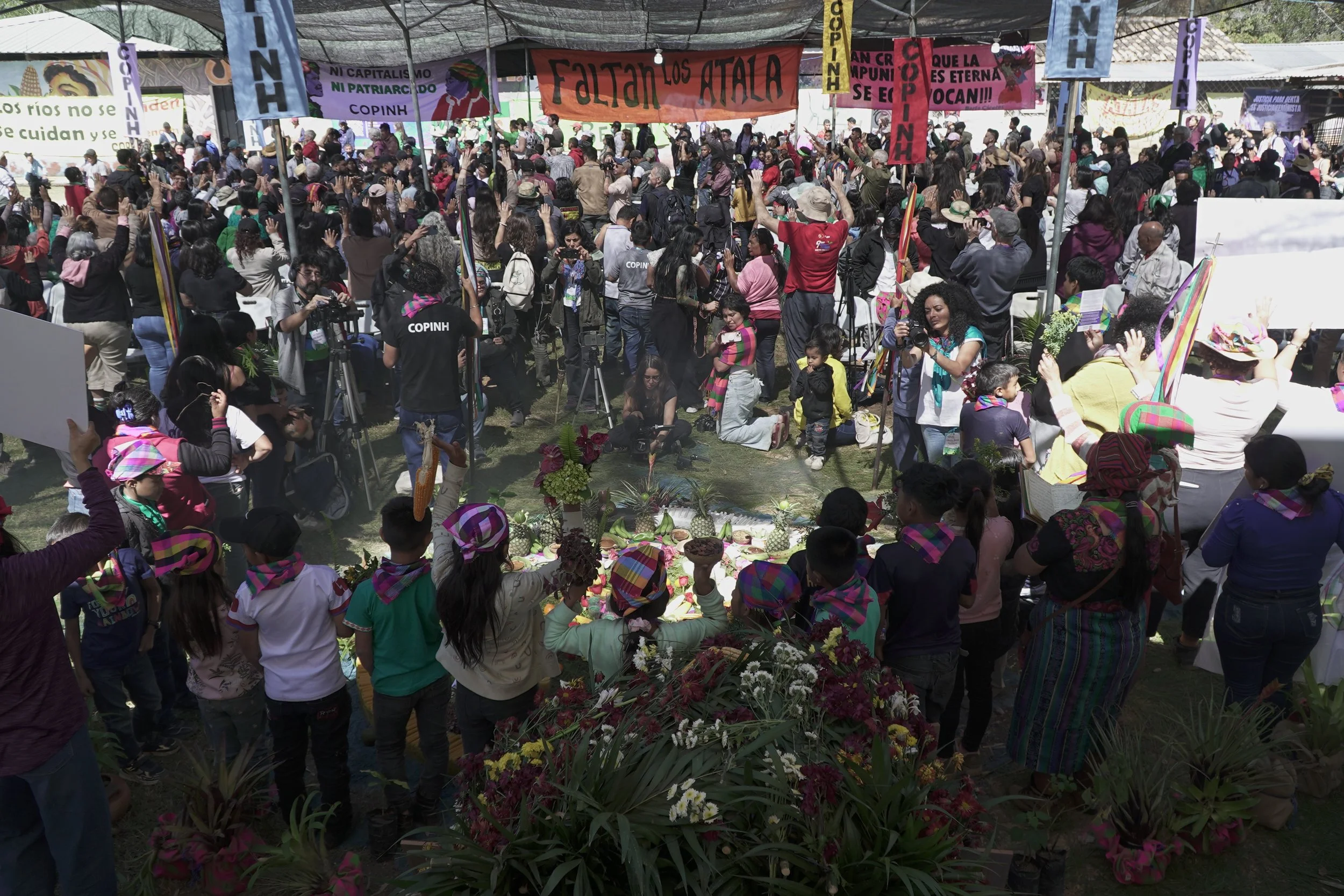
Fuente: JASS Mesoamérica.
“Berta didn’t die!... Berta became millions! We are all Berta!”
Leer en español.
A long, straight dirt road runs from the highway to La Esperanza, an indigenous community center in the mountains of western Honduras. Today, the vans and buses streaming along the usually quiet road toward a cluster of wooden buildings where, for the past two decades, a growing international movement has spread across oceans.
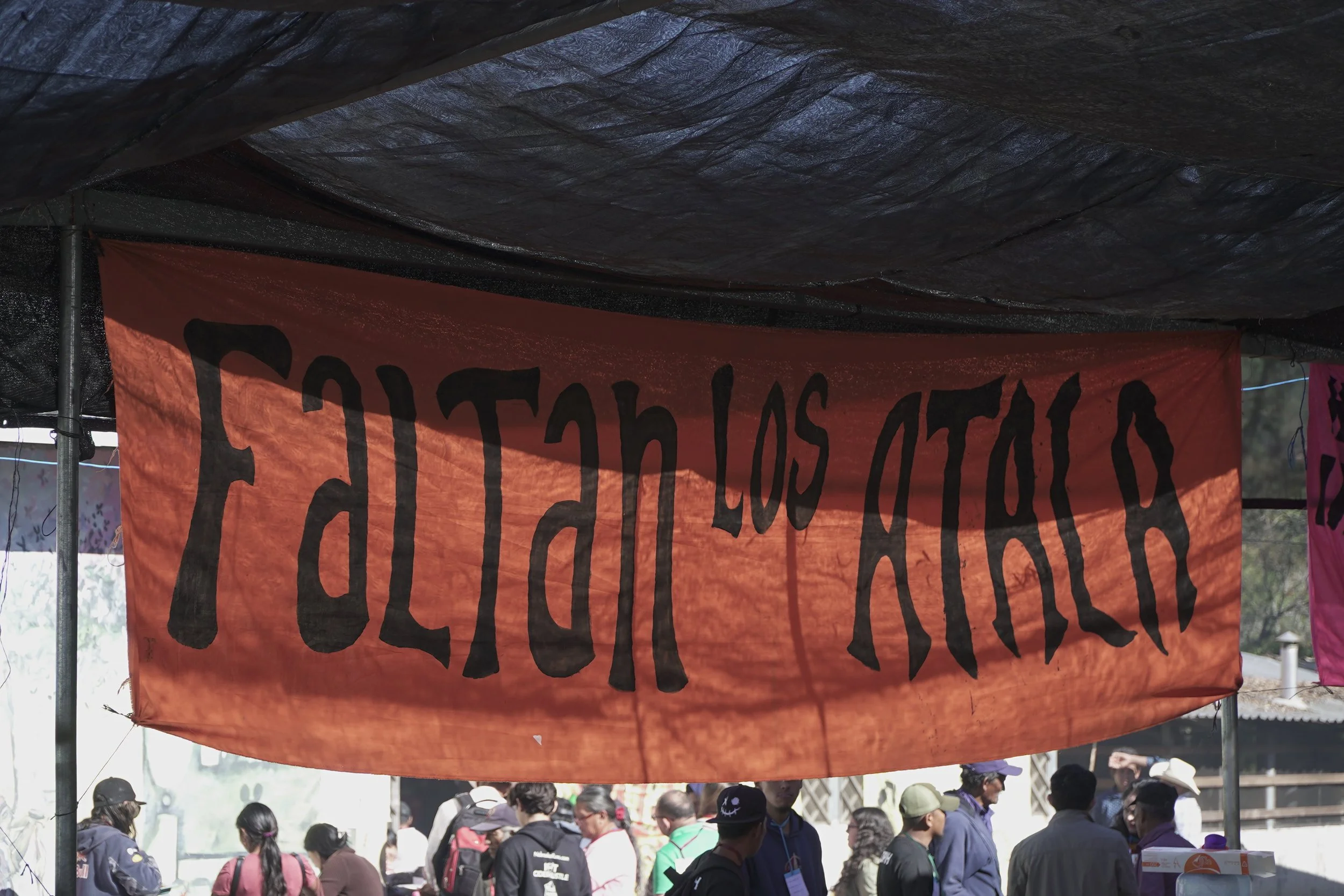
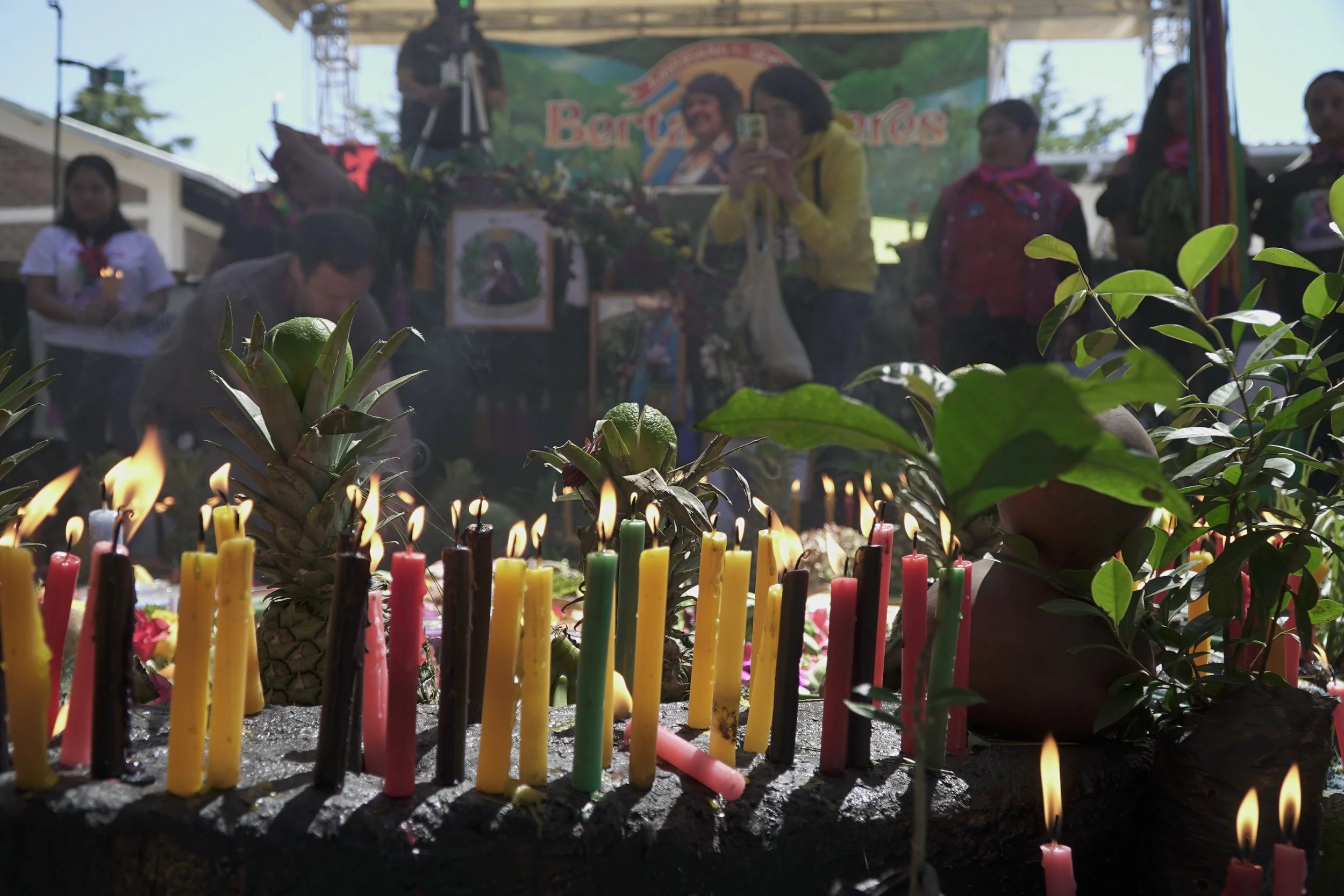
It has been ten years since the founder of that movement, Berta Cáceres, was assassinated in her home for leading the Lenca indigenous communities in a battle against a multimillion-dollar hydroelectric project. Now, we are among hundreds of people from Honduran communities and around the world who have gathered, not just for a memorial, but rather, to discuss next steps.
The meeting was called by the Civic Council of Popular and Indigenous Organizations of Honduras (COPINH) to mark ten years since Berta Cáceres’ murder and to demand justice from the Honduran government. At the gathering, COPINH, other Honduran communities and organizations, and allies from around the world have heard findings from the recent report by the Interdisciplinary Group of Independent Experts (GIEI) charged with investigating the 2016 murder.
The extensively documented investigation reveals that Berta’s murder was not an isolated act, but the culmination of a broad effort by powerful corporate and state actors, enabled by international financial institutions, to impose a hydroelectric project on the Gualcarque River. Berta built a strong movement of impacted indigenous Lenca communities and supporters to resist the dam that would have decimated their land, environment, and community life.
Who is Berta Cáceres?
Berta Cáceres Flores was born on March 4, 1971, into a family committed to the causes of Central American peoples and to her Lenca community in La Esperanza. Her mother, Austra Bertha Flores, who survives her, was a midwife, a member of parliament, the mayor of her town, and the first female mayor of the Honduran department of Intibucá. She strongly supported Salvadoran refugees who migrated across the border during the war in neighboring El Salvador, particularly from communities united by their Lenca heritage.
Her mother’s example decisively shaped Berta’s life and that of her children, and led her, along with other community leaders, to found COPINH in March 1993. The organization works to strengthen communities in their struggle to protect natural resources and the environment, and to defend the rights of Indigenous and peasant peoples in Honduras.
Berta Cáceres became a symbol of resistance for women, Indigenous, peasant, and grassroots movements and organizations around the world. To understand her impact, we talked with people who worked alongside her for years. Many pointed to Berta´s political practice rooted in Feminist Popular Education [1] (FPE)—not just as a methodology but as a way of building collective analysis, strengthening community organizing, and generating critical awareness grounded in lived realities and local knowledge. She insisted that struggles for land, the environment, and Indigenous rights must be understood through a gender lens, taking into account the structural inequalities shaping women’s lives and their ability to defend their territories.
In a culture where patriarchal dynamics were often denied or downplayed, Berta consistently challenged masculinized and racialized power structures, influencing movements to recognize that meaningful democracy cannot be built while excluding half the population. Those closest to her recall the coherence between her anti-patriarchal and anti-racist politics and her daily practice within her organization, her community, and her relationships. She lived and taught the belief that working for justice must be a collective process, requiring people and communities to move together toward shared goals. Her actions and strategies revolved around strengthening the organization, COPINH, and building collective power.
Berta’s leadership was also marked by an openness to dialogue across difference, engaging with those who thought and acted differently to build common ground in the defense of life and natural resources. She had a profoundly human impact on those she came in contact with: people recall her joy, her sense of humor, and her way of celebrating life even in the most difficult conditions. She put consideration, love, and collective care—among families, communities, and organizations—at the center of life and work. She saw these priorities, not often associated with leadership, as essential to sustain organizing. They also formed the basis of weaving together diverse strategies and alliances, from the local to the international, drawing on the experiences of movements across contexts to strengthen shared struggles.
Through her work with COPINH, Berta Cáceres helped build a collective vision of organizing rooted in Indigenous knowledge, territorial defense, and a rethinking of power relations between human beings and the Earth. This work—and the movement it strengthened—earned her the 2015 Goldman Environmental Prize, widely regarded as the world’s most prestigious award for environmental defenders. [2]
But her celebrity intensified the threat she posed. Her adept leadership and COPINH’s organized opposition to the mega-project on their lands directly challenged powerful economic and political interests invested in extractive projects. The GIEI report documents how, a year later, assassins hired by local power elites, with the complicity of the government and international actors [3], planned, executed, and attempted to cover up the crime.
What is COPINH?
COPINH is a movement of more than 200 communities and over 50 organizations or community groups from five Honduran departments: Comayagua, Intibucá, Santa Bárbara, Lempira, and La Paz. It is grounded in the ancestral principles of the Lenca people, who view the care of Mother Earth as a sacred duty and consider it a living heritage of which humanity is an inseparable part.
The struggle for life and the land that COPINH continues today is one of Berta Cáceres’ greatest legacies. Her daughter, Bertha Zúñiga Cáceres, currently serves as COPINH’s general coordinator. She coordinates an Assembly organized into various commissions, in which women hold 50% of leadership positions. Drawing on her own character, knowledge, and experience, fueled by collective strength and a spirit that combines strategic thinking with bravery in action, Bertha Zúñiga is building on her mother’s legacy.
From COPINH’s perspective, the Gualcarque River, particularly in the community of Río Blanco within their territory, is not merely a resource but a living being that ensures flora and fauna live in balance, with the understanding that this balance also ensures the survival of people and communities. They consider the river to be sacred.
COPINH has had to travel a complex and difficult path to carry out its work, as have many organizations and movements that defend the rights of people and natural resources in other parts of the world. Since its founding, COPINH and its leaders have developed and strengthened popular education approaches and methodologies. They have secured land titles for indigenous and peasant communities, built community roads, and worked to revive the ancestral knowledge and practices of the Lenca people. They have also established community radio stations as a medium for information and education for the communities, and in solidarity with others in Honduras.
The organization combines legal, spiritual, political, and educational strategies and forms part of international peasant and indigenous peoples’ networks at the continental and global levels. This multi-level organizing has carried the voices of Berta and COPINH to global forums and events, including those on climate change and the impact of extractive projects on territories. COPINH has also researched and denounced the direct involvement or complicity of various actors, including government officials, in Honduran criminal networks.
Although Río Blanco has an established indigenous identity and longstanding forms of community organization, the Honduran government under then-president Juan Orlando Hernández refused to formally recognize it or its traditional leaders as Lenca, in a pointed denial of their collective rights as a people and of the community’s autonomy over its territory. Protests over the continuous violation of their rights by COPINH and the communities were met with threats, criminalization, and the assassination of leaders in their territories—as happens all too often throughout Latin America and in other parts of the world. According to international organizations and observatories, defenders of natural resources in Latin America, and in Honduras in particular, face a higher risk of being murdered than any other human rights group or movement on Earth. [4]
COPINH defends the Gualcarque River
Threats and attacks against COPINH and other Honduran organizations worsened dramatically in 2009, when the Honduran right and military leaders carried out a coup d’état against the democratically elected government. The new government, a product of the coup, rapidly expanded extractive projects, including large-scale mining, energy, and monoculture projects. A succession of coup-linked governments pushed through privatization of the electricity and other sectors and handed out tax exemptions and major incentives to foreign investors, private companies, and investment banks.
It was in this context in 2009 that DESA Desarrollos Energéticos S.A was founded. Between 2010-2011, the government approved contracts and operating permits for DESA’s Agua Zarca hydroelectric project, allowing it to build a dam on the Gualcarque River. The GIEI report found that DESA lacked “both the technical expertise and the required financial solvency [necessary to implement the project]—ignoring internal technical warnings and signing a contract with extraordinary profit margins for the company’s partners.” [5]
In numerous COPINH assemblies, the communities rejected the project and expressed their determination to defend the Gualcarque River. The project began without conducting prior, free, and informed consultation, as required by Convention 169 of the International Labour Organization (ILO), which Honduras has ratified. Protests mobilized by the Río Blanco community and COPINH in opposition to the project were met with persecution, threats, criminalization, and the assassination of community leaders. Some community members were co-opted and bribed to create division and weaken opposition.
On July 15, 2013, Tomás García, a well-known COPINH leader, and his 15-year-old son, Alan García Domínguez, were murdered. A non-commissioned officer from the army’s engineering battalion, Kevin Saravia, was found guilty of the crime and sentenced to 20 years in prison.
COPINH members and leaders who continued to oppose the Agua Zarca hydroelectric project in Río Blanco were persecuted and detained arbitrarily, along with their families and communities, particularly as opposition to the project intensified. These acts had the clear intention of demobilizing and dividing the communities. As the GIEI report documents, some of these actions were directly instigated by DESA and members of the Honduran government.
Members of COPINH and residents of Río Blanco have been subjected to surveillance, direct threats against them and their families, attacks on their homes and destruction of their crops, intimidation with weapons, assaults in public spaces, and raids on their homes, as documented in the numerous testimonies collected by the international experts. In 2016 and after Berta´s assasination, due to pressure from COPINH and national and international actors, the hydroelectric project was halted. In 2017, the international banks that financed the project, primarily the FMO of the Netherlands and FinFund of Finland, announced their withdrawal. The project remains on hold.
Movements Demand Justice For Berta
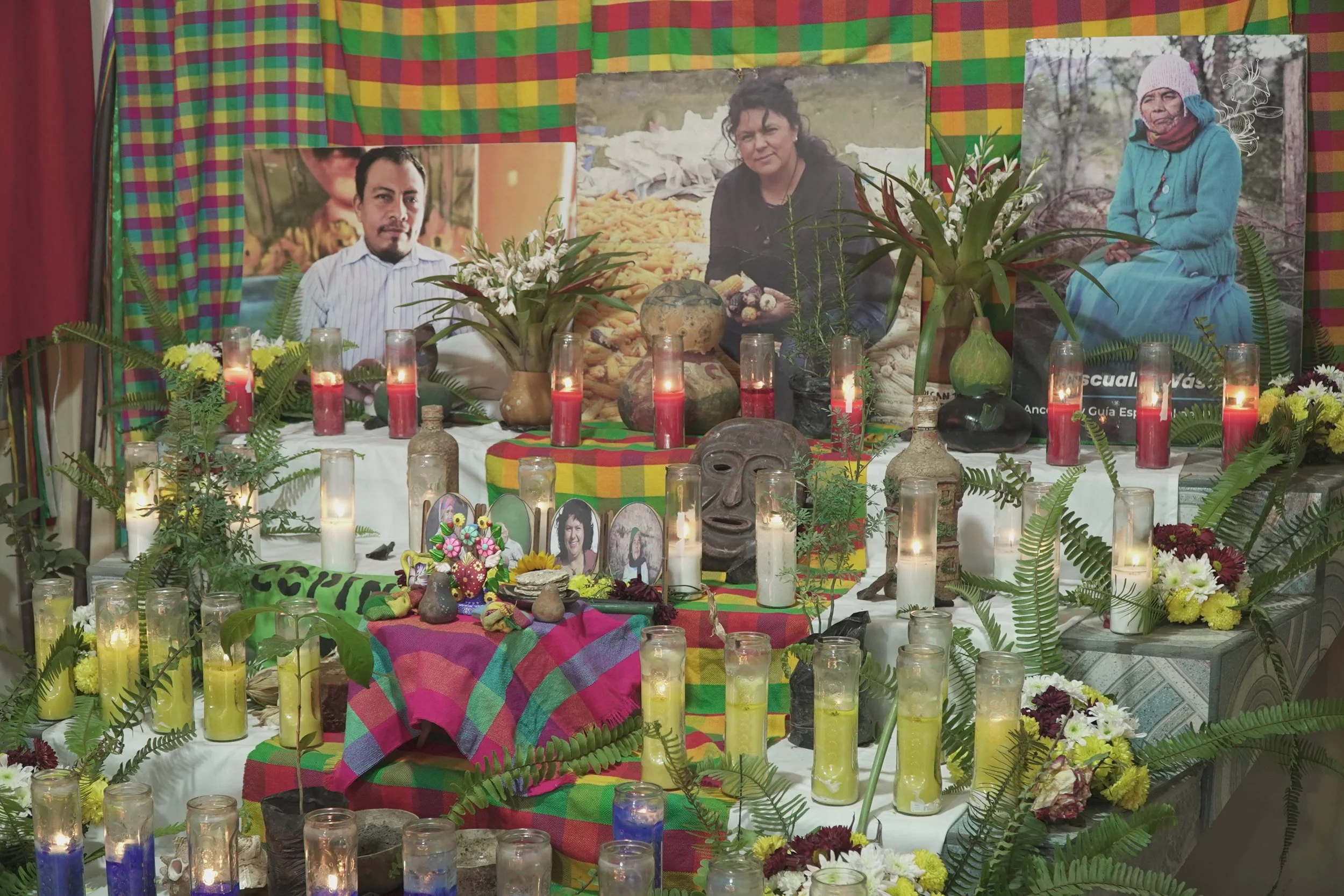
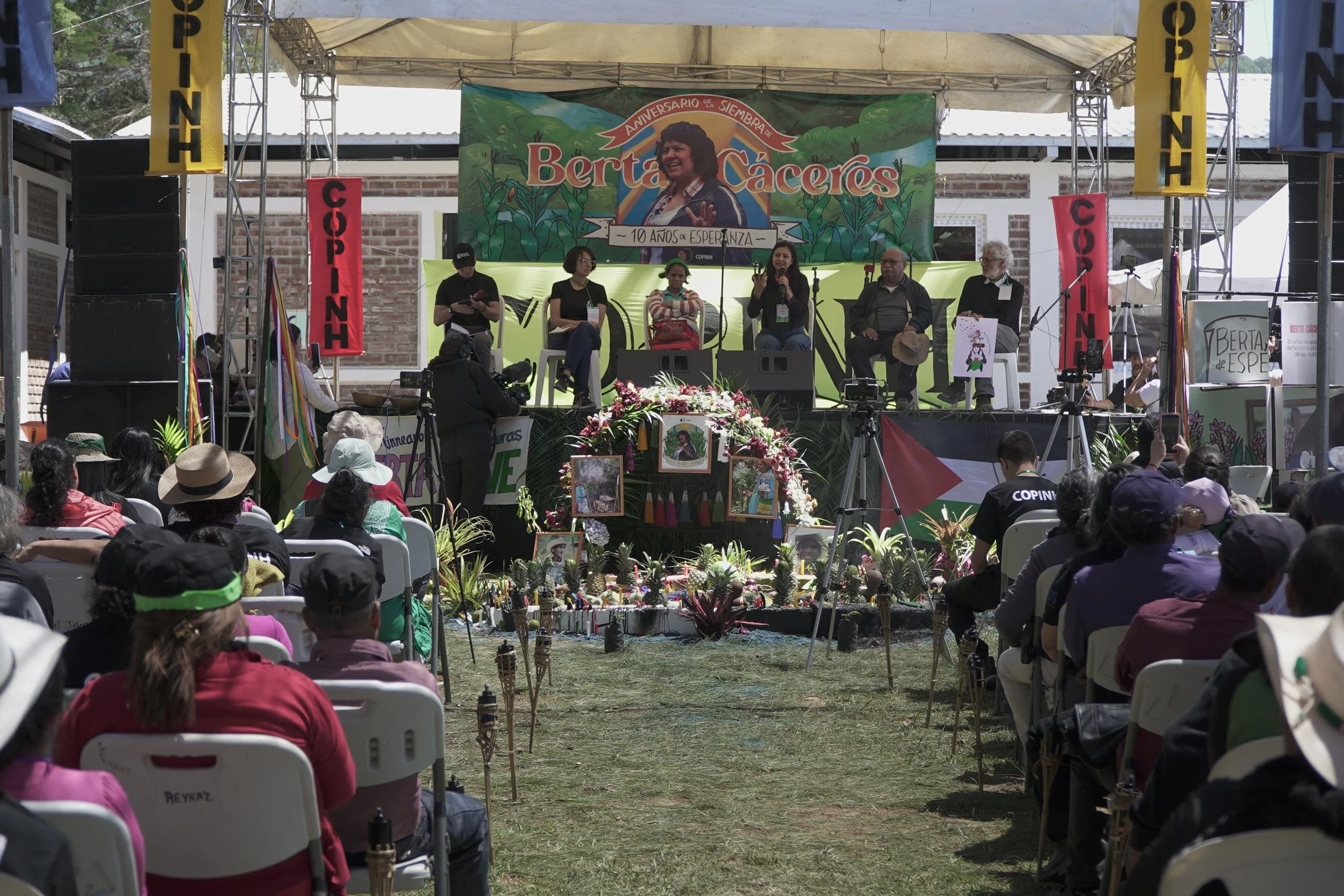
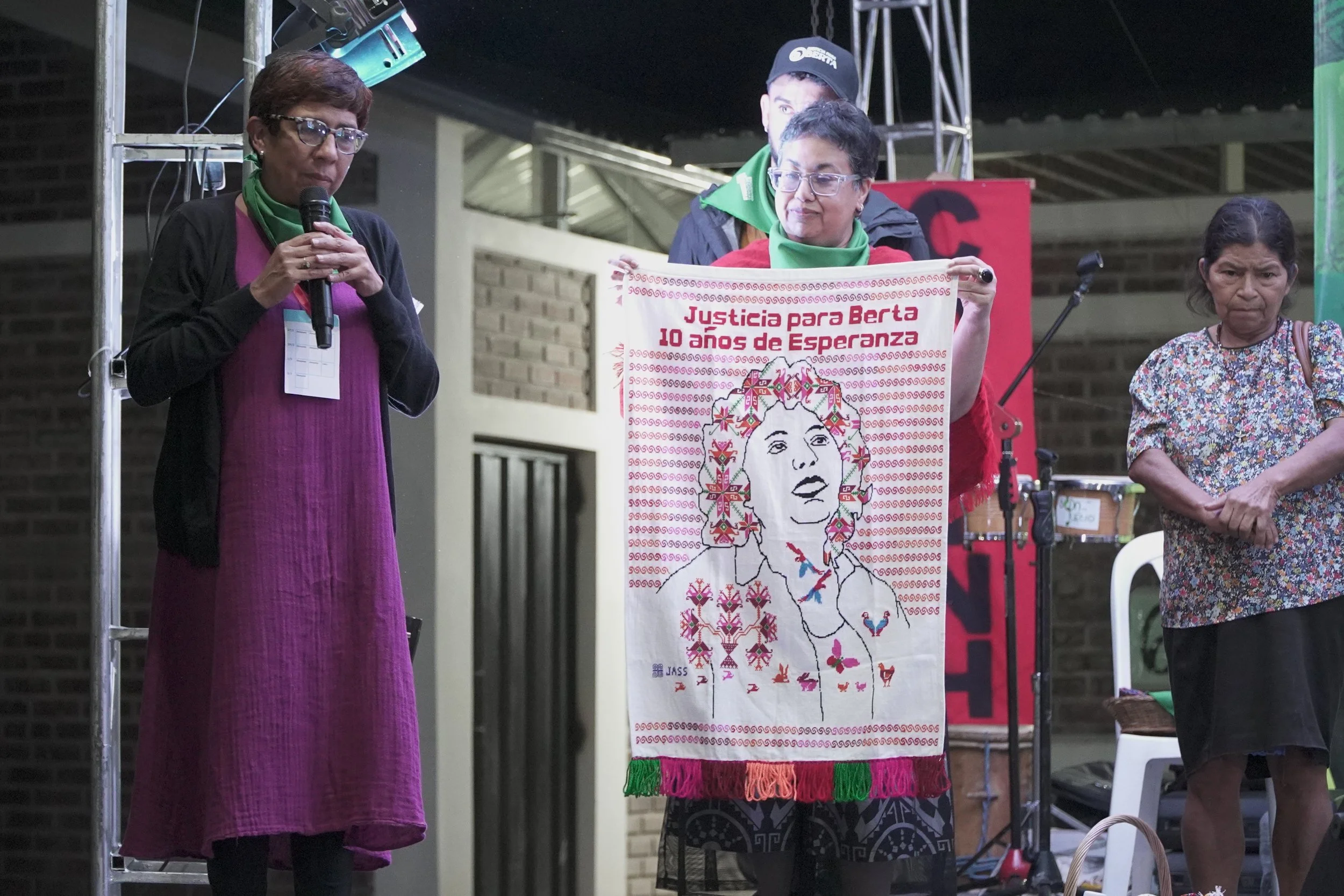
Immediately after the murder of Berta Cáceres, COPINH mobilized to demand a full investigation into Berta’s death and related attacks on her family, the organization, and the communities. Ten years later, the assassins and the head of DESA are behind bars, but COPINH continues to demand that the powerful masterminds of the murder be prosecuted.
COPINH’s strength and alliances led to the GIEI investigation and the recent revelations of the planning and complicity on many levels that led up to the murder. COPINH carried out its own investigations, often in partnership with jurists and lawyers from Honduras and other countries, to expose and denounce illegal actors, and to trace the international financing behind the illegal activities and corruption which the GIEI report now confirms.
The organization maintains national and international ties of solidarity with other movements mobilizing in response to violations of their rights as peoples and against the criminalization and murder of their leaders. [6] COPINH’s relentless search for the truth has made this a paradigmatic case of how major actors in extractivist projects operate behind the scenes—and of what on-the-ground organizing can accomplish to stop them.
Read the expert report on the murder
~
Full text here.
~
Read the expert report on the murder ~ Full text here. ~
Allies Press For The Truth
In October 2024, the Inter-American Commission on Human Rights (IACHR), an autonomous body of the Organization of American States, along with the Government of Honduras, and members of Berta’s family and organization—who previously were granted IACHR precautionary measures [7]—signed the “Cooperation Agreement for International Technical Assistance from a Human Rights Perspective in the Investigation of the Masterminds Behind the Murder of Berta Cáceres and Related Crimes.” That agreement established the Interdisciplinary Group of Independent Experts (GIEI) in February 2025, under the auspices of the IACHR. Its stated purpose was “that said GIEI may provide international technical assistance to the State in the investigation regarding the masterminds and related crimes in the murder of Bertha Isabel Cáceres Flores”. [8]
The initial agreement for six months was extended for an additional six months to January 15, 2026. To fulfil its objective, the GIEI was granted the following powers: a) To provide international technical assistance to the State in the investigation regarding the masterminds and related crimes connected to the murder of Berta Isabel Cáceres Flores; b) to conduct a technical analysis of the lines of investigation to determine criminal liability; c) to conduct a comprehensive technical analysis of the investigation into related crimes; d) and to draft a proposal for a Comprehensive Reparation Plan for the Victims.
The GIEI was composed of Ricardo Guzmán Loyo, Roxanna Altholz, and Pedro Biscay, with Jaime Vidal serving as Executive Secretary. The experts were selected by the IACHR in discussion with the State of Honduras and the representative party [9] and based on criteria of suitability, technical expertise, independence, and impartiality. This was to ensure the GIEI’s autonomy and a support team on the ground.
In the report as it was presented to all of us at the February 2026 gathering, the GIEI concludes that the murder of Berta Cáceres was the result of an organized criminal operation, carefully planned and executed through a collaborative structure that included hitmen, intermediaries with military training (among them an active-duty military officer convicted as the principal perpetrator), and personnel and executives of the company DESA (among them, owners and shareholders, primarily from the Atala family, with one member currently a fugitive from justice). The report also identifies networks of support, tolerance, and omission across various branches of the State, and concludes that the Honduran government had prior information that could have been used to prevent the murder.
The report finds that funds from the Central American Bank for Economic Integration (BCIE, its Spanish acronym) and the Dutch FMO, which officially financed the Agua Zarca project, were used to pay for illicit surveillance activities, armed incursions into the territory, logistics, and various other activities that culminated in the murder of Berta Cáceres. The GIEI notes that international and multilateral financial institutions failed to fulfill their specific obligations, particularly regarding assuring free, prior, and informed consent in accordance with the rights of Indigenous Peoples, in breach of their responsibilities to carry out due diligence. A lawsuit is currently pending in the Netherlands against FMO regarding this case. [10]
The comprehensive financial analysis of DESA’s funds revealed that of the total US$18,540,325.62 allocated to the project, 67% (US$12,426,190.54) “was diverted to finance irregular practices, including checks issued to pay the perpetrators of the crime and payments to spread false narratives that would divert attention. During the trials of the assassins and one mastermind prior to the report, it became evident that there had been no investigation into the company’s top executives and shareholders.” [11]
The GIEI report further documents the individual and collective harm caused to Berta Cáceres’ family, to COPINH, and to the communities, highlighting the serious, specific impact on women and young people. It calls on the State to implement a Reparations Plan based on the right to know the truth, rehabilitation, compensation, satisfaction, and guarantees of non-repetition.
Thus, the GIEI has uncovered a web of complicity among businessmen, state officials, international financial institutions, and hitmen, all colluding to facilitate the hydroelectric project, including in violent acts against the communities that opposed it. In the information it provides about the chain of events that led to the murder of Berta Cáceres, the report draws on testimonies and evidence presented in the trials, extensive documentary evidence (including financial records and wiretaps), and information provided by the Public Prosecutor’s Office.
Nonetheless, the report stresses the need for further investigation and calls on the Honduran State to ensure that the masterminds behind the murder have not yet been brought to justice.
The GIEI report contains recommendations addressed to various government officials and actors, as well as to the IACHR itself. In a communiqué on the report, the IACHR commended the rigor and comprehensiveness of the findings presented and affirmed that, in accordance with its mandate, it will follow up on recommendations “through the various mechanisms and tools of the Inter-American Human Rights System, with a focus on the centrality of the victims and their families.” [12]
Despite the compelling evidence presented in the GIEI report, the Agua Zarca project concession has still not been definitively cancelled, and the Honduran government has still not recognized the ancestral territory of Río Blanco that would grant residents the right to stewardship. The State has also yet to open the intelligence files related to the case for inclusion in legal proceedings of the Public Prosecutor’s Office.
This Affects All Of Us
The information contained in the GIEI report is relevant not only to Honduras, COPINH, and the family of Berta Cáceres, but also to the rest of the world. It exposes a web of collusion among a wide range of actors to promote extractive projects at the expense of the communities inhabiting those territories, typically without consultation or through flawed consultation processes.
It describes a model of profit at the expense of the lives of people and communities, and demonstrates that the Agua Zarca project violates cultural practices, divides and erodes the social fabric, and above all, threatens the life of the planet by disrupting its already precarious environmental balance.
It is her leadership in opposing this model as a shared struggle of many people and movements around the world that has made Berta Cáceres an enduring symbol of hope and resistance.
As the GIEI report notes, “The murder of Berta Cáceres cannot be understood as an isolated incident or as a petty crime, but rather as an event that occurred within a context of structural deficiencies characterized by violence, militarization, corruption, the concentration of economic power, and institutions co-opted by private interests.” [13]
Her murder “was the culmination of a prolonged process of persecution, surveillance, criminalization, and violence perpetrated against the indigenous leader” [14].
The impact of such violence falls particularly hard on women. The report notes that “Berta Cáceres embodied these specific risks in a paradigmatic way. As a Lenca woman, a community leader, and a high-profile public figure, she was the target of attacks that not only called her leadership role into question but also sought to delegitimize her through accusations of “inciting disorder” and “hindering development,” and by putting her family at risk. [15]
We Maintain The Struggle
On January 27, 2026, shortly before the release of the GIEI report, Nasry Asfura took office as president of Honduras amid an election marred by irregularities, corruption, and the explicit support of U.S. President Donald Trump. Asfura belongs to the same party that brought Juan Orlando Hernández to power.
Hernández was later extradited to the United States and sentenced to 40 years in prison for drug trafficking. Days prior to the Honduran presidential elections, Trump granted him a “full and complete pardon”. This raised serious concerns, given the severity of Hernández’s crimes as established in a U.S. court, and the stark contradiction between pardoning a major drug trafficker and the drug war rhetoric of the current U.S. administration, used to justify policies such as deporting migrants, military interventions, extrajudicial executions, and violence against civilians in Latin America.
A symbolic event in March 2026 increased concerns and appears to indicate that the new Honduran government is not inclined to continue to seek justice for Berta’s murder. A bust of Berta Cáceres, installed in March 2022 in the Plaza de las Etnias at the Tegucigalpa Civic Centre by then-President Xiomara Castro as part of a tribute to the Lenca people and other peoples of Honduras, was removed in March 2026. To date, no explanation has been provided.
A recent development also shows that efforts to ensure impunity continues. The legal counsel for Daniel Atala Midence—who is accused of being one of the masterminds behind the crime and is a fugitive from justice—has filed a petition to block the GIEI’s investigation. We will see how this will unfold.
The struggle of Berta Cáceres and COPINH, like that of many other land and territory defenders in Honduras, emerged clearly in the gathering in La Esperanza, and reflects a broader fight to maintain balance and harmony on a besieged planet—not only among human beings, but also with nature. It points to the possibility of preserving a world for all while also exposing the risks faced by those who defend life: not only the right to survive but also the right to live with dignity, joy, and hope—rights that are increasingly under threat.
Notes
[1] Popular Education, originally conceived and promoted by Paulo Freire as a form of liberating education, places the experiences and knowledge of individuals, their communities, and peoples at the centre to strengthen collective consciousness and knowledge and enrich the practices and strategies of communities and social movements.
[2] In her acceptance speech, Berta Cáceres highlighted the organizational nature of her struggle: “…COPINH, walking alongside peoples toward their emancipation, reaffirms its commitment to continue defending water, rivers, and our common goods and those of nature, and our rights as peoples. Let’s wake up! Let us wake up, humanity, there is no time left!.......”. See: https://youtu.be/AR1kwx8b0ms?si=J8fDJF35GGZrWdRY
[3] The perpetrators were identified as Henry Hernández, Elvin Rápalo, Edilson Duarte, Óscar Torres Mariano Díaz Chávez (former Army Major), Sergio Rodríguez Orellana (DESA) and Douglas Bustillo. One mastermind behind the crime, Roberto David Castillo Mejía (former president of DESA), was also found guilty and sentenced. In the fatal attack on Berta Cáceres at her home in La Esperanza, Intibucá, Gustavo Castro, a friend of COPINH and a territorial defender from Mexico was visiting on work-related business. Castro was wounded by the perpetrators but survived the attack. He was held in custody for over a month by Honduran authorities, who treated him as a suspect without recognizing his status as both a victim and a witness to the murder.
[4] Between 2012 and 2023, the Mesoamerican Initiative of Women Defenders (IMD) documented 4,504 attacks against women defenders and organizations defending land and territories. In its 2024 report, the organization Front Line Defenders notes that at least 300 defenders from 28 countries were killed, of whom 64 were environmental and land rights defenders, 49 of whom were identified as women. Of the total murders recorded that year, 19 took place in Honduras.
[5] Interdisciplinary Group of Independent Experts (GIEI), 2026, “Final Report. Report on the murder of human rights defender Berta Cáceres and related crimes. Measures for comprehensive reparations and recommendations.” P . 311. https://9ac69281-0895-4461-a8ab-fe779cfb9e33.filesusr.com/ugd/94b2ad_1bb0f67f3fab4fbcb624ecaa86856164.pdf
[6] Between 2016 and 2017, a period that includes the year Berta Cáceres was murdered, the National Network of Women Defenders of Honduras recorded 1,237 attacks against women defenders, their families, and their organizations. According to a national survey conducted in 2022, more than half of the women human rights defenders in Honduras reported having suffered threats of rape or other forms of gender-based violence as a direct consequence of their advocacy work. This context is exacerbated by practices of systematic criminalization that disproportionately affect women, particularly due to their limited financial resources, and that deepen mistrust in the judiciary and the police. Women land defenders face criminal proceedings for offenses such as land encroachment or invasion, in some cases equated with organized crime, and the imposition of humiliating judicial measures and forms of harassment, including periodic court appearances, detention, and--in extreme cases--sexual violence. They often also face stigmatization campaigns by public officials, the media and even members of their own communities and families who discredit them as “anti-development,” “bad mothers,” or criminals, increasing their vulnerability. See: https://www.frontlinedefenders.org/en/resource-publication/global-analysis-2022
[7] “...relatives, COPINH members and other people identified are the beneficiaries of the precautionary measure No. 112/16 granted by IACHR”. Cooperation Agreement, page 3. See (in Spanish): https://www.oas.org/es/cidh/prensa/comunicados/2025/038_Acuerdo_GIEI_Honduras_Firmado.pdf
[8] See (in Spanish): https://www.oas.org/es/cidh/prensa/comunicados/2025/038_Acuerdo_GIEI_Honduras_Firmado.pdf
[9] This decision was backed by the signing of an agreement in October 2024. More information here (in Spanish): https://www.oas.org/es/CIDH/jsForm/?File=/es/cidh/prensa/comunicados/2025/038.asp
[10] For more information, see (in Spanish)": https://www.business-humanrights.org/en/latest-news/honduras-copinh-interpone-denuncia-penal-contra-banco-neerland%C3%A9s-fmo-por-complicidad-en-corrupci%C3%B3n-malversaci%C3%B3n-blanqueo-de-dinero-y-violencia/
[11] GIEI Report, 2026: 168.
[12] See: https://www.oas.org/es/CIDH/jsForm/?File=/es/cidh/prensa/comunicados/2026/006.asp
[13] GIEI Report, 2026: 364.
[14] GIEI Report, 2026: 9.
[15[ GIEI Report, 2026: 50.
Patricia Ardón is a proud Guatemalan woman, feminist, with studies in Social Anthropology. Patricia has written articles and published several works related to regional contexts, the construction of peace and the contribution of women to these processes, as well as designed and facilitated training processes, with emphasis in recent years on Feminist Popular Education. Previously JASS’ Regional Director of JASS Mesoamerica, she is currently JASS’ Senior Advisor on Feminist Popular Education.